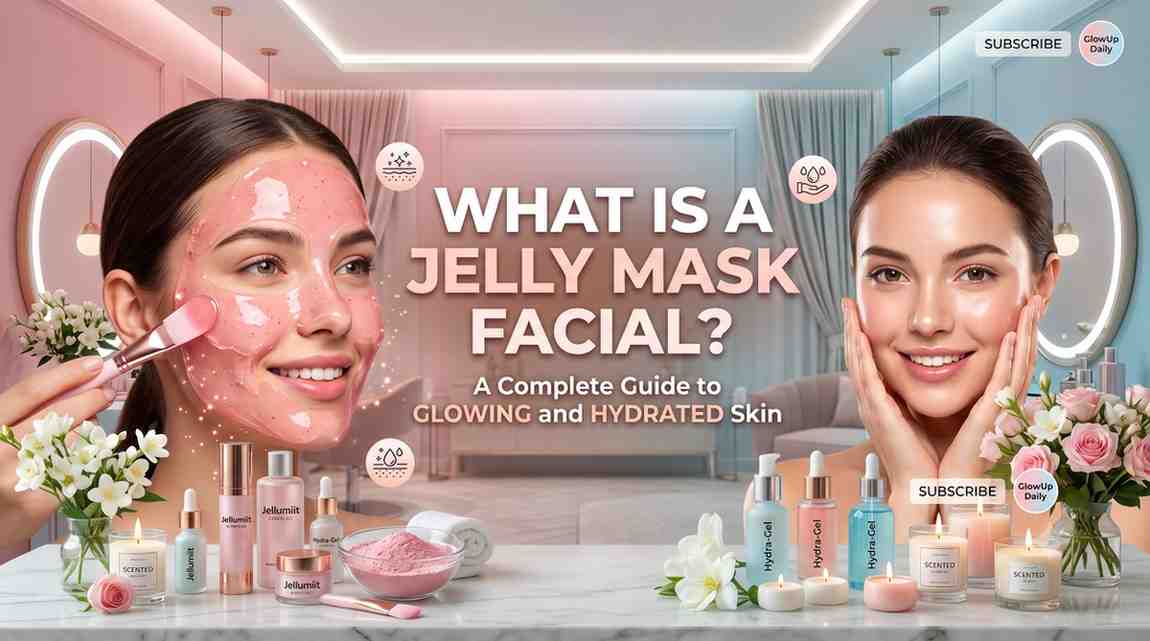
If you’re interested in the latest skincare trends, you may have heard about jelly mask facials. Skincare professionals and beauty fans love this treatment for its cool feel, deep hydration, and the way it leaves skin looking fresh and glowing.
Jelly mask facials differ from cream or clay masks in that they form a soft, flexible layer on your skin. This helps the active ingredients work well and makes the experience soothing. No matter your skin type—dry, oily, combination, or sensitive—this treatment can be tailored to your needs.
This guide explains what a jelly mask facial is, how it works, its benefits, and how to add it to your skincare routine.
What Is a Jelly Mask Facial?
A jelly mask facial is a skincare treatment that uses a jelly-like mask made from gentle ingredients. When mixed with water, it turns into a cool gel. Once on your skin, it forms a layer that locks in moisture and helps your skin absorb helpful ingredients.
Unlike sheet or clay masks, a jelly mask facial keeps your skin hydrated. It also helps calm irritation and can temporarily reduce redness.
People often get this treatment after cleansing, exfoliating, extractions, or a facial massage to get the most benefits. Since it’s gentle, a jelly mask facial works for almost all skin types and can be used year-round.
What Makes a Jelly Mask Different?
Jelly masks are special because of their texture and how you use them. They start as a powder that you mix with water to make a thick, smooth gel. After you put it on, it sets into a flexible layer that peels off easily and doesn’t hurt.
Its main advantages include:
- Locks moisture into the skin
- Creates a cooling sensation
- Supports better ingredient absorption
- Leaves skin feeling soft and refreshed
- Helps reduce temporary redness after facial treatments
Jelly masks don’t dry out your skin. Instead, they keep it feeling comfortable and hydrated throughout.
How Does a Jelly Face Mask Work?
A jelly face mask forms a protective layer on clean skin. This layer slows down water loss, so hydrating ingredients stay on your skin longer.
During the treatment:
- Skin is thoroughly cleansed.
- Optional exfoliation removes dead skin cells.
- Serums are applied based on skin concerns.
- The jelly mask is spread evenly across the face.
- The mask remains on the skin for approximately 15–20 minutes.
- After setting, it is gently peeled away in one piece.
This process helps your skin look smoother, calmer, and more refreshed.
Jelly Mask Benefits for Every Skin Type
Jelly masks are popular because they’re so versatile. Different types can help with hydration, brightening, calming, oil control, or anti-ageing.
1. Deep Hydration
The mask helps your skin hold onto moisture and stay hydrated, which is great for dry skin.
2. Cooling and Soothing Effect
Its cool texture feels soothing right after exfoliating, being in the sun, or getting a facial treatment.
3. Improved Skin Softness
After you take off the mask, your skin usually feels smoother, softer, and more flexible.
4. Temporary Reduction in Redness
Many estheticians suggest using jelly masks after extractions because they help calm skin that’s just been treated.
5. Enhanced Skincare Absorption
The mask’s layer helps the serums you applied earlier work better.
6. Suitable for Sensitive Skin
Most professional jelly masks are gentle and don’t irritate, so they’re good for sensitive skin.
7. Refreshing Appearance
One of the best things about a jelly mask is the instant glow your skin gets after using it.
8. Comfortable Application
Unlike clay masks that get tight, jelly masks stay flexible and comfortable the whole time.
Ingredients Commonly Found in Jelly Masks
Different jelly face mask formulations contain ingredients designed for specific skin concerns.
Common ingredients include:
- Hyaluronic Acid
- Aloe Vera
- Vitamin C
- Collagen
- Chamomile Extract
- Green Tea Extract
- Rose Extract
- Cucumber Extract
- Niacinamide
- Seaweed Extract
Depending on the formula, these ingredients can help hydrate, soothe, brighten, or nourish your skin.
Who Should Try a Jelly Mask Facial?
A jelly mask facial can be suitable for:
- Dry skin
- Oily skin
- Combination skin
- Sensitive skin
- Mature skin
- Acne-prone skin (non-active inflammatory stages)
- Dull skin
- Dehydrated skin
Since there are many types of jelly masks, skincare professionals can pick one that matches your skin goals.
How to Use a Jelly Mask
If you’re not sure how to use a jelly mask, following the right steps will help you get the most out of it and enjoy maximum hydration and comfort.
Step 1: Cleanse the Face
Remove makeup, sunscreen, and impurities using a gentle cleanser.
Step 2: Exfoliate (Optional)
A mild exfoliation removes dead skin cells and prepares the skin.
Step 3: Apply Serum
Use a hydrating or treatment serum before the mask.
Step 4: Mix the Mask
Mix the powder with water as the instructions say, until it’s smooth.
Step 5: Apply Evenly
Spread a thick, even layer over your face, and avoid your nostrils if needed.
Step 6: Relax
Leave the mask on the skin for 15–20 minutes.
Step 7: Peel Off
Gently lift one edge and remove the mask in a single piece.
If you want to use a jelly mask at home, always follow the product’s instructions to get the best and safest results.
When Should You Get a Jelly Mask Facial?
A jelly mask facial is ideal:
- Before weddings
- Before parties
- Before special occasions
- After a long travel
- Following professional facials
- During seasonal skin dryness
- Whenever the skin feels dehydrated
Skincare experts often recommend this treatment every 2 to 4 weeks, depending on your skin's needs.
Professional vs. Home Jelly Mask
| Professional Treatment | Home Application |
|---|---|
| Customised for skin concerns | General skincare maintenance |
| Applied after facial procedures | Applied after cleansing |
| Uses professional-grade products | Consumer formulations |
| Guided by trained estheticians | Self-application |
| May include additional serums | Usually limited to one product |
Both professional and home jelly masks can be helpful, depending on what you want for your skin results.
To maximise your results:
- Cleanse thoroughly before application.
- Apply hydrating serum underneath.
- Drink plenty of water.
- Avoid harsh exfoliation immediately afterwards.
- Use sunscreen during the daytime.
- Moisturise after treatment.
Using jelly masks regularly usually yields better long-term results than using them only occasionally.
Common Myths About Jelly Masks
- Myth: Jelly masks are only for dry skin.
Reality: They can also be formulated for oily, combination, acne-prone, and mature skin. - Myth: They replace moisturiser.
Reality: Moisturiser remains an important part of daily skincare. - Myth: More frequent use always gives better results.
Reality: Overusing any skincare treatment may not be necessary. Following product recommendations is generally best. - Myth: Jelly masks permanently brighten skin.
Reality: Healthy skincare habits and sun protection significantly help maintain a brighter complexion.
Product Spotlight: Enhance Your Facial Routine with Just O2 Jelly Face Mask
If you want a salon-like skincare treatment at home, the Just O2 Jelly Face Mask is a great choice. Its cool texture feels soothing and leaves your skin hydrated, soft, and refreshed. Use it with a gentle cleanser, hydrating serum, and moisturiser for a complete routine that helps your skin look healthy.
Overview
A jelly mask facial is more than just a trend. Its cool feel, hydrating effects, and relaxing use make it a great choice for both professional and home routines. Whether you want more hydration, soothing care, or a healthy glow, adding a good jelly mask to your routine can improve your skincare experience.
When you use jelly masks alongside a balanced skincare routine, sun protection, and healthy habits, you can achieve smoother, softer, and fresher-looking skin over time.
Frequently Asked Questions (FAQs)
1. What is a jelly mask facial?
A jelly mask facial is a skincare treatment that uses a cooling, gel-like mask to help hydrate the skin, support serum absorption, and leave the complexion feeling refreshed and smooth.
2. Can I use a jelly face mask every day?
Most jelly masks are used 1 to 3 times a week, depending on the product instructions and your skin's needs.
3. Are jelly masks suitable for oily skin?
Yes. Many jelly mask formulations are designed for oily, combination, and acne-prone skin while still providing lightweight hydration.
4. What are the main jelly mask benefits?
Common jelly mask benefits include hydration, soothing temporary redness, improving skin softness, enhancing skincare absorption, and giving the skin a refreshed appearance.
5. How long should a jelly mask stay on the face?
Most jelly masks are left on for approximately 15–20 minutes before being gently peeled off.
6. Can people with sensitive skin use a jelly mask?
Many jelly masks are formulated for sensitive skin, but it is recommended to perform a patch test and follow product directions.
7. Should I apply moisturiser after using a jelly mask?
Yes. Applying moisturiser after removing the mask helps maintain hydration and supports the skin barrier.