Activated Charcoal Jelly Mask: The Honest Guide to Deep Pore Detox (2026 Skincare Edition)
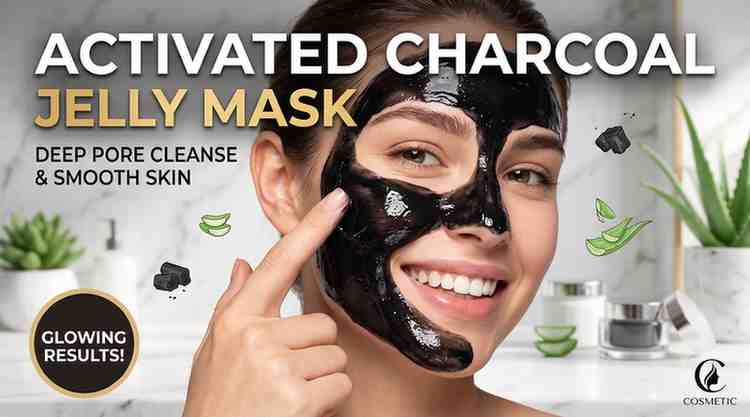

You've probably scrolled past it a dozen times this week — someone peeling a jet-black, jiggly mask off their face on Instagram, revealing skin that looks noticeably brighter underneath. That product is almost always an activated charcoal jelly mask, and the internet's obsession with it isn't just hype.
But here's the real question nobody answers honestly: does it actually work, or is it just satisfying to peel off?
As someone who has tested dozens of charcoal-based skincare formulas over the years and spoken with estheticians about ingredient efficacy, I can tell you this — the answer is more nuanced than "yes" or "no." It depends on your skin type, how the mask is formulated, and how you use it.
This guide breaks down everything: the science, the real benefits, the mistakes people make, and how to get salon-level results at home.
An activated charcoal jelly mask is a gel-based facial treatment infused with activated carbon — a highly porous form of charcoal that's been processed to increase its surface area and absorption capacity.
Unlike traditional clay masks that dry stiff and hard, a jelly (or gel) format stays soft, cooling, and semi-transparent. It's usually peeled off in one piece rather than rinsed away, which is part of why this format has become so popular in visual skincare content.
The "jelly" texture typically comes from ingredients like:
This combination is what separates a charcoal jelly mask from a standard charcoal peel off mask — the jelly versions tend to be gentler and less drying because they carry more humectants.
Activated charcoal is porous at a microscopic level. Each particle has thousands of tiny "pockets" that can trap and hold onto substances they come into contact with — a property called adsorption (not to be confused with absorption).
When applied to skin, this activated charcoal face mask works by:
It's important to set realistic expectations here. Charcoal cannot reach deep into clogged pores to extract blackheads the way a professional extraction facial can. What it can do is meaningfully reduce surface oil and give skin a temporary matte, refreshed appearance — which is exactly why it's so popular before events or photos.
Featured Snippet Answer: An activated charcoal jelly mask works by using porous carbon particles that adsorb (trap) excess oil, dirt, and surface impurities, which are then lifted away when the gel mask is peeled off the skin.
Based on both formulation science and real user experience, here are the benefits that genuinely hold up:
A charcoal facial mask noticeably reduces shine, especially in the T-zone, within minutes of use. This is one of its most consistent and dermatologist-acknowledged effects.
The cooling gel texture combined with the peel-off action leaves skin feeling smoother immediately — great for a pre-event skin reset.
While it doesn't shrink pores permanently, removing trapped oil and debris makes pores appear smaller temporarily.
The peeling action removes a light layer of dead skin cells along with the mask, giving mild physical exfoliation.
Unlike clay, jelly masks don't crumble or flake off your clothes — a small but real usability win.
Quick Bullet Summary:
| Mask Type | Texture | Best For | Drying Level |
|---|---|---|---|
| Activated Charcoal Jelly Mask | Soft, bouncy gel | Oily/combination skin, quick detox | Low-Medium |
| Charcoal Peel Off Mask | Thin, plasticky | Blackhead-prone areas | Medium |
| Detox Charcoal Mask (clay-based) | Thick, hardens fully | Very oily/acne-prone skin | High |
| Purifying Charcoal Mask (cream) | Creamy, doesn't harden | Sensitive-oily combo skin | Low |
| Charcoal Skincare Mask (sheet) | Fabric soaked in serum | Dry to normal skin, hydration + mild detox | Very Low |
This comparison matters because many people assume "charcoal mask" means one single product — it doesn't. The activated charcoal gel mask format specifically strikes a middle ground: enough purifying power to matter, without the harsh tightness of clay.
Great For:
Use With Caution:
Expert Insight: In my experience testing charcoal formulas, the single biggest factor in whether someone likes this mask isn't the charcoal itself — it's the base formula quality. A charcoal jelly mask loaded with alcohol-based gelling agents will dry out even oily skin over time. Always check the first five ingredients, not just the marketing claim of "charcoal."
Pro Tip: Apply this activated charcoal jelly mask on slightly damp (not wet) skin for a smoother, easier peel with less tugging.
Not all charcoal masks are created equal. When comparing products, prioritize:
A well-formulated purifying charcoal mask should leave your skin feeling clean, not stripped. If your face feels tight and uncomfortable immediately after rinsing, that's a formulation red flag, not a sign it's "working."
DIY charcoal masks (mixing activated charcoal powder with water or aloe gel) are popular online, but they come with real limitations:
For most people, a professionally formulated activated charcoal gel mask delivers more consistent, safer results than a DIY mix — especially for peel-off application, which requires precise gelling chemistry that's hard to replicate at home.
Realistic timeline based on typical use patterns:
What it won't do: cure cystic acne, remove deep blackheads permanently, or replace a proper cleansing/exfoliation routine. Treat it as a supporting step in your skincare routine, not a standalone solution.
Q1: Can I use an activated charcoal jelly mask every day?
No. Most dermatologists and estheticians recommend 1–2 times per week to avoid over-drying and irritating the skin barrier.
Q2: Does charcoal actually remove blackheads?
It can loosen surface debris and reduce the appearance of clogged pores, but it does not perform true extractions like a facialist would.
Q3: Is a charcoal peel off mask safe for sensitive skin?
It can be, but patch testing is essential. Sensitive skin should look for fragrance-free, alcohol-free formulas and limit use to once weekly.
Q4: What's the difference between a charcoal jelly mask and a charcoal peel off mask?
Jelly masks contain more hydrating agents and feel softer/bouncier, while traditional peel-off masks tend to be thinner and drier, offering a stronger but harsher peel.
Q5: Can I use this mask if I have dry skin?
Yes, but sparingly — once a week maximum, followed immediately by a rich moisturizer to restore hydration.
Q6: Does activated charcoal help with acne?
It may help manage surface oil that contributes to breakouts, but it isn't a treatment for active acne or bacteria-driven breakouts, which require targeted ingredients like salicylic acid or benzoyl peroxide.
An activated charcoal jelly mask genuinely earns its popularity — not because it's a miracle detox product, but because it delivers a real, visible, short-term improvement in oil control and skin texture when formulated well and used correctly.
Think of it as a weekly reset tool, not a daily necessity. Pair it with a consistent cleansing routine, gentle exfoliation, and proper hydration, and it becomes a genuinely useful addition to an oily or combination skin routine.
Next step: Patch test a small amount on your jawline for 24 hours before your first full application — especially if you have reactive or sensitive skin.

Jelly Masks: The Ascendant Skincare Phenomenon Jelly masks have emerged as the pr...
Read more
If you want a natural way to care for your skin, a seed mask is a great choice. Seeds ...
Read more
Jelly Mask Price in India: Which Jelly Mask Offers the Best Value for Your Skin? ...
Read more
Everything You Need to Know for Healthy, Glowing Skin: Hydro Jelly Mask Guide Hydro...
Read more
Are Jelly Face Masks Good? A Dermatology-Inspired Guide to Hydrated, Glowing Skin I...
Read more
Primary Keyword: Coffee Jelly Mask Secondary Keywords: coffee face mask, jelly ...
Read more
1. What Is a Jelly Mask? You've seen it on TikTok. You've spott...
Read more
Healthy, glowing skin never goes out of style. As people become more ingredient-cons...
Read more
Jelly masks are a popular choice for anyone looking for healthy, glowing, and well-hydra...
Read more
You've probably scrolled past it a dozen times this week — someone peeling a jet-b...
Read more