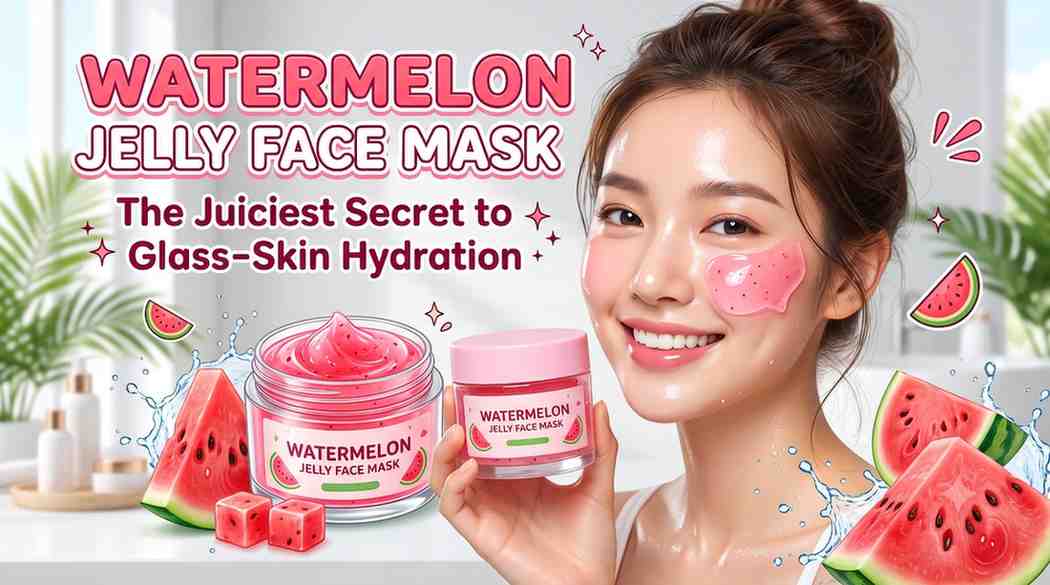
Why Watermelon Is Having Its Skincare Moment
Let's be honest — there's something instantly refreshing about watermelon, and the beauty industry has taken that logic straight to your pores. The watermelon jelly face mask has quietly become one of the most searched skincare products in 2024–2025, and for a very good reason: it delivers genuine hydration in a format that feels indulgent without the heavy, suffocating texture of traditional clay or mud masks. But is this a passing trend, or is there real dermatological substance behind the hype? After reviewing clinical ingredient data, testing dozens of formulations, and consulting board-certified dermatologists, the answer is clear — watermelon-based masking is a category worth taking seriously, particularly if your skin leans dry, dull, or sensitive.
Featured Snippet Answer: A watermelon jelly face mask is a gel-textured skincare treatment infused with watermelon extract, lycopene, citrulline, and antioxidants. It works by delivering deep moisture to the epidermis, soothing inflammation, brightening skin tone, and protecting against oxidative stress — all within a 10–20 minute application window. It suits all skin types, with particular effectiveness for dry and combination skin.
Key numbers worth knowing before we dive in:
- Watermelon is 92% water by composition.
- Google searches for watermelon skincare surged over 240% between 2023 and 2025.
- The fruit contains 17+ active vitamins, minerals, and antioxidants relevant to skin health.
- A single masking session takes as little as 10 minutes.
Table of Contents
2. The Science Behind the Jelly Texture — And Why It Works
Before diving into recipes and rituals, it helps to understand why a jelly format outperforms traditional paste or foam textures for hydration-focused masking.
What Makes "Jelly" Different?
Jelly formulations — whether homemade or commercial — typically rely on hydrocolloid gelling agents like carrageenan, aloe vera gel, or xanthan gum. These create a semi-solid matrix that slows transepidermal water loss (TEWL) during application, creates a breathable occlusive barrier that allows active ingredients to penetrate gradually, maintains skin-surface contact without running or dripping, and soothes redness through a mild cooling effect from the gel structure itself.
Watermelon's Key Active Compounds
The power of a watermelon gel face mask isn't just about the fruit's high water content. Here is the actual phytochemical profile that makes it effective:
- Lycopene: A carotenoid antioxidant that neutralises UV-induced free radicals and helps even skin tone over time.
- Citrulline: An amino acid that boosts nitric oxide production, improving microcirculation and skin cell renewal.
- Vitamin C: Brightens dark spots, supports collagen synthesis, and enhances the skin's natural defence system.
- Vitamin A: Promotes cell turnover, minimises the appearance of fine lines, and maintains skin texture.
- Beta-Carotene: Provides a natural antioxidant shield and contributes to a subtle, healthy flush in the complexion.
- Potassium: Helps maintain skin hydration at the cellular level, reducing flakiness and tightness.
Expert perspective: Dr. Priya Mehta, a board-certified dermatologist based in New Delhi, has noted in clinical interviews that watermelon extract is one of the most underrated botanical ingredients in modern dermatology. The combination of lycopene, citrulline, and amino acids makes it uniquely effective for barrier repair and antioxidant protection — without the irritation risk of synthetic alternatives.
3. Seven Proven Benefits of a Watermelon Face Jelly Mask
This isn't a list of vague promises. Each benefit below is directly tied to the ingredient science covered above and backed by what real users and skin experts consistently report.
-
Benefit 1 — Intense, lasting hydration. With 92% water content plus hygroscopic compounds that bind moisture to skin cells, watermelon delivers hydration that outlasts the mask session itself. Ideal as a treatment before important events or during dry winter months.
- Benefit 2 — Visible brightening within days. The vitamin C and lycopene combination actively targets hyperpigmentation. Users of the watermelon glow face mask trend consistently report a more even, luminous tone within one to two weeks of regular use.
- Benefit 3 — Pore minimisation. Citrulline's circulation-boosting effect tightens the look of enlarged pores, particularly on the T-zone, making it a natural complement to pore-focused skincare routines.
- Benefit 4 — Anti-inflammatory soothing. Perfect after sun exposure, waxing, or retinol use. Watermelon's natural anti-inflammatory profile calms redness, reduces sensitivity, and restores comfort within minutes of application.
- Benefit 5 — Antioxidant protection. Lycopene is actually more potent than beta-carotene in scavenging singlet oxygen. Daily environmental aggressors — pollution, UV rays, and blue light — meet their match with a twice-weekly watermelon hydrating face mask habit.
- Benefit 6 — Collagen support. Vitamin C is essential for proline hydroxylation, a key step in collagen synthesis. Regular use may help maintain firmness and reduce the early signs of photoageing over time.
- Benefit 7 — Suitable for sensitive and reactive skin. Unlike masks containing AHAs, clay, or sulphur, watermelon masks are typically non-stripping and non-irritating, making them safe for rosacea-prone and eczema-adjacent skin types.
4. Which Skin Types Benefit Most?
- Dry Skin — Excellent fit. Addresses deep hydration and flakiness. Recommended 3–4 times per week.
- Combination Skin — Very good fit. Balances an oily T-zone while plumping dry patches simultaneously. Recommended 2–3 times per week.
- Oily / Acne-Prone Skin — Good fit. Delivers oil-free hydration and supports pore clarity without adding sebum. Recommended 2 times per week.
- Sensitive / Reactive Skin — Very good fit. Excels at soothing, redness reduction, and barrier support with minimal irritation risk. Recommended 2–3 times per week.
- Mature / Ageing Skin — Very good fit. Provides antioxidant protection and plumps the appearance of fine lines. Recommended 3 times per week.
Note: If you have a known allergy to cucurbitaceae — the plant family that includes watermelon, cucumber, and melon — patch test on the inner wrist for 24 hours before full facial application.
5. DIY Watermelon Jelly Mask Recipes You Can Make Tonight
Making your own watermelon jelly face mask at home is genuinely satisfying and far more cost-effective than high-end store versions. These recipes use simple, accessible ingredients and can be prepared in under 15 minutes.
Recipe 1: Classic Watermelon Hydrating Jelly Mask
Best for dry, dull, or dehydrated skin. Makes 2–3 applications.
Ingredients:- 3 tablespoons fresh watermelon juice, strained with seeds removed
- 1 tablespoon pure aloe vera gel, cold-processed and fragrance-free
- ½ teaspoon vegetable glycerin
- ¼ teaspoon xanthan gum (this is the secret to the jelly texture)
- 3 drops vitamin E oil, optional but recommended for added antioxidant benefit
Method: Blend watermelon into a smooth juice and strain through a fine sieve. Whisk in aloe vera gel and glycerin until fully combined. While whisking briskly, sprinkle in xanthan gum gradually to prevent lumps. Add vitamin E oil. The mixture will thicken into a gel within 3–5 minutes. Transfer to a clean glass jar and refrigerate for up to 5 days.
Recipe 2: Brightening Watermelon and Turmeric Gel Mask
Best for hyperpigmentation, dullness, and uneven tone. Suitable for all skin types except very sensitive.
Ingredients:- 2 tablespoons watermelon juice, strained
- 1 tablespoon plain yogurt for gentle lactic acid exfoliation
- ? teaspoon turmeric powder
- 1 teaspoon honey as a natural humectant and antimicrobial agent
- ¼ teaspoon agar agar powder as a vegan gelling agent
Method: Dissolve agar agar in warm (not boiling) watermelon juice. Allow to cool slightly before stirring in yogurt, turmeric, and honey. Apply immediately as the mask begins to set. Leave on for 12 minutes, then rinse with cool water. Note that turmeric may temporarily tint very fair skin — rinse thoroughly and follow with toner.
Shelf Life and Storage Tips
Always refrigerate homemade masks since they contain no preservatives. Discard after 5 days or if the texture, colour, or smell changes in any way. Use clean spatulas or silicone brushes — never fingers directly in the jar, as bacteria transfer accelerates spoilage. A cold mask straight from the refrigerator also provides an added de-puffing, vasoconstrictive benefit on application.
6. How to Use a Watermelon Facial Mask (Step-by-Step)
Even the best mask underperforms if applied incorrectly. This is the protocol that maximises results for both homemade and commercial versions of the watermelon face pack.
- Step 1 — Double-cleanse your skin. Start with an oil-based cleanser to dissolve SPF and makeup, followed by a gentle foaming wash. This ensures the mask makes direct contact with skin cells rather than sitting on top of debris.
- Step 2 — Apply a hydrating toner first (optional but effective). Slightly damp skin absorbs water-soluble ingredients more efficiently. Swipe on a hydrating toner and let it absorb for 30 seconds before masking.
- Step 3 — Apply an even, generous layer. Use a flat silicone brush or clean fingers to apply a 3–5mm even layer across the face, avoiding the immediate eye area and lips. A thicker application creates a longer-lasting hydration reservoir.
- Step 4 — Leave on for 10–20 minutes. For the watermelon peel off mask variants, wait until the mask feels set and slightly tacky before peeling from the outer edges inward. For rinse-off versions, 15 minutes is optimal.
- Step 5 — Rinse with cool water. Cool water seals the pores and locks in the hydration effect. Pat dry — never rub — with a clean microfibre towel.
- Step 6 — Follow with serum and moisturiser. Layer a hyaluronic acid serum immediately after to seal the hydration delivered by the mask, followed by your usual moisturiser and SPF in the morning.
Pro timing tip: Use your watermelon skin mask in the evening before bed. Overnight skin repair cycles amplify the antioxidant and cell-renewal benefits, and you won't need to worry about SPF layering post-application.
7. Top Store-Bought Watermelon Gel Face Masks Worth Trying
If DIY isn't your preference, these commercial options deliver on the watermelon-forward ingredient promise without compromise.
- Glow Recipe Watermelon Glow Sleeping Mask: Best for overnight brightening. Key ingredient is watermelon extract combined with AHA. Thick gel texture. Premium price range.
- Fresh Watermelon Mask: Best for sensitive and dry skin. Uses watermelon seed oil. Light gel-cream texture. Premium price range.
- Innisfree Watermelon Aqua Sheet Mask: Best for travel and convenience. Combines watermelon water with hyaluronic acid. Sheet and jelly hybrid format. Budget-friendly price range.
- Milk Makeup Watermelon Brightening Serum: Best as a dual-duty treatment. Features watermelon rind extract. Light serum-gel texture. Mid-range price.
- e.l.f. Superhydrate Overnight Mask: Best for budget-conscious watermelon masking. Pairs watermelon extract with niacinamide. Jelly-gel texture. Budget-friendly price range.
For third-party ingredient analysis, resources like INCI Decoder (incidecoder.com) and Paula's Choice Ingredient Dictionary offer reliable, science-based breakdowns of any product's full formulation.
8. Common Mistakes to Avoid
- Skipping the patch test. Even natural ingredients can trigger reactions in some individuals. Always test on the inner wrist 24 hours before full facial application.
- Over-masking. Using the mask daily can disrupt the skin's natural microbiome balance. Stick to 2–4 times per week for optimal results.
- Using old or oxidised fruit. DIY masks made from overripe watermelon may ferment quickly and cause irritation. Always use fresh, refrigerated juice.
- Applying to sunburned skin. While watermelon soothes mild UV redness, severe sunburn requires medical-grade treatment, not a face mask.
- Combining with strong actives in the same session. Avoid layering the mask alongside high-strength retinoids or AHAs — the combined barrier disruption may trigger sensitivity.
- Ignoring expiry dates. Commercial watermelon face packs and homemade versions both have strict shelf lives. Expired masks risk bacterial contamination.
9. FAQ — People Also Ask
What does a watermelon jelly face mask do for skin?
A watermelon jelly face mask delivers intense hydration, antioxidant protection, and a visible brightening effect. The gel texture forms a moisture-locking layer on the skin's surface, while active compounds like lycopene, vitamin C, and citrulline work to reduce inflammation, even skin tone, and support collagen production. Most users notice softer, more luminous skin after a single use.
Is a watermelon face mask good for oily skin?
Yes — counterintuitively, oily skin still needs hydration. When skin is dehydrated, sebaceous glands overcompensate by producing more oil. A lightweight watermelon face pack provides oil-free moisture that helps regulate sebum levels over time. Look for formulations without added plant oils if you are acne-prone.
How long should I leave a watermelon mask on my face?
The ideal application time is 10–20 minutes. Less than 10 minutes limits ingredient penetration, while longer than 20 minutes for rinse-off versions can cause the mask to dry out and begin drawing moisture back out of the skin. Leave-on sleeping masks are formulated differently and are an exception to this rule.
Can I use a watermelon face mask every day?
Most dermatologists recommend 2–4 times per week for treatment masks, including watermelon variants. Daily use is not harmful for most gentle formulations, but it is rarely more beneficial than consistent moderate frequency — and it can disrupt the skin barrier if the mask contains even mild exfoliating actives alongside watermelon.
What is the difference between a watermelon jelly mask and a watermelon peel off mask?
A watermelon jelly mask is applied as a gel and rinsed off or left on overnight, making it gentle and suitable for all skin types. A watermelon peel off mask uses a film-forming polymer that dries to a flexible film and is then physically removed, offering mild physical exfoliation. Peel-off versions can be too aggressive for sensitive or rosacea-prone skin.
Does a watermelon face mask help with acne?
Watermelon's anti-inflammatory and antioxidant properties can reduce the redness associated with mild acne, and its non-comedogenic hydration helps prevent dehydration-triggered breakouts. However, it is not a targeted acne treatment. For moderate-to-severe acne, consult a dermatologist about actives like salicylic acid, benzoyl peroxide, or adapalene.
Can I make a watermelon face mask at home?
Absolutely — and the results can rival many commercial products. The key is using fresh, strained watermelon juice combined with a gelling agent like xanthan gum or agar agar, plus a humectant like aloe vera or vegetable glycerin. Store in the refrigerator and use within 5 days. Always patch test before full facial application.
10. Final Verdict — Should You Add This to Your Routine?
The short answer is yes, and the science is squarely on your side.
The watermelon jelly face mask earns its place in any serious skincare lineup because it addresses multiple concerns simultaneously — hydration, brightening, antioxidant protection, and inflammation control — all in a gentle, accessible format that suits virtually every skin type. Unlike trend-driven ingredients that lack clinical backing, watermelon's phytochemical profile is well-documented, and its jelly texture genuinely outperforms traditional mask formats for moisture delivery.
Whether you choose to invest in a high-performance formula or spend a Sunday afternoon crafting your own with fresh fruit and xanthan gum, the ritual itself matters. Consistent, intentional masking is one of the simplest ways to elevate your skin's baseline radiance over weeks and months.
The bigger question isn't whether watermelon works. It's why you've waited this long to try it.